
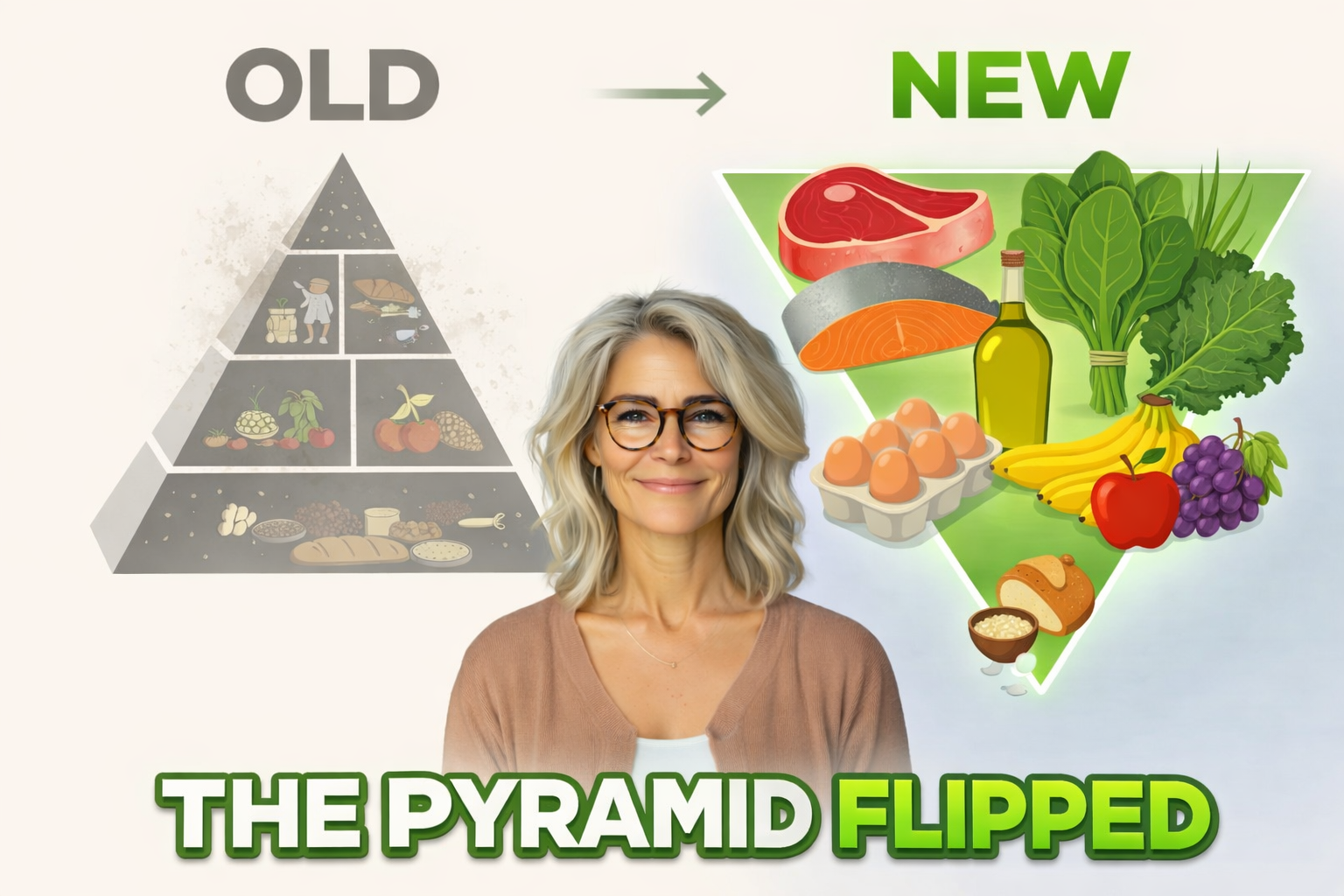
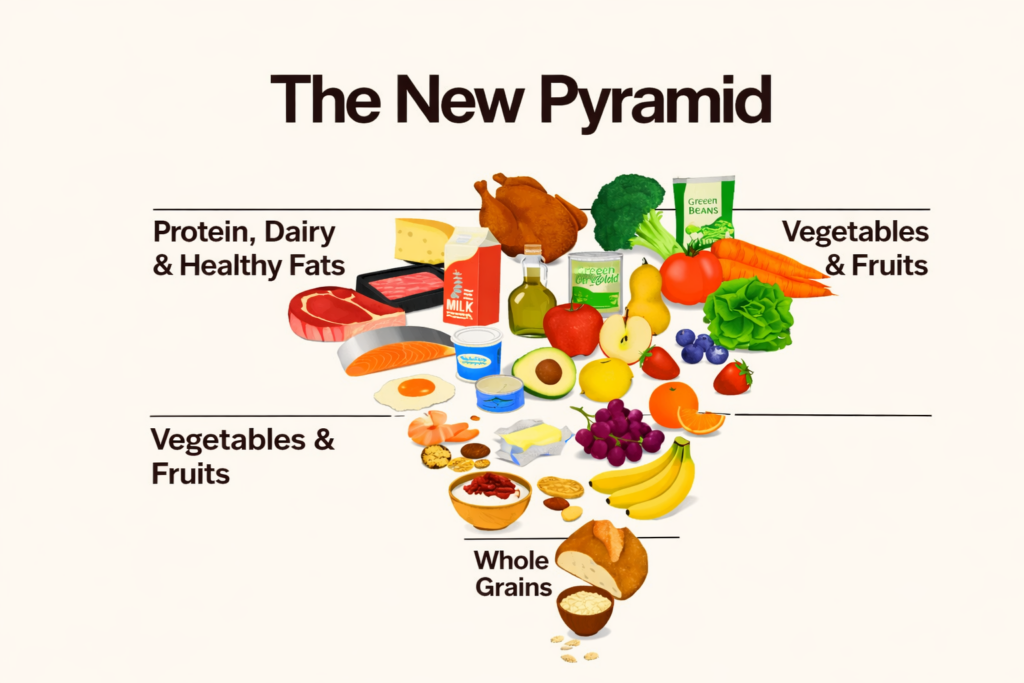
The USDA’s 2026 food pyramid revision reflects a substantial shift in nutritional guidance, emphasizing protein, healthy fats, and whole foods over the carbohydrate-heavy focus of the original 1992 model. This updated framework aligns with current evidence on aging-related physiological changes, particularly for adults aged 50–70. This scientific-style blog outlines key differences between the old and new pyramids, reviews the rationale behind these updates, and discusses the implications for promoting healthy aging and preventing chronic disease.
Public dietary guidelines have historically shaped food policy, health education, and individual behavior. The 1992 USDA Food Guide Pyramid was designed to simplify dietary advice, but it prioritized high carbohydrate intake, primarily from grains, and promoted fat avoidance. Over time, concerns about rising rates of obesity, type 2 diabetes, and sarcopenia led to a reevaluation of these recommendations.
In 2026, the USDA introduced a restructured food pyramid based on contemporary research emphasizing the role of protein intake, fat quality, and whole-food nutrition in long-term health, particularly for older adults. This article compares the 1992 and 2026 pyramids, highlighting the scientific justification behind the changes.
Structural Comparison
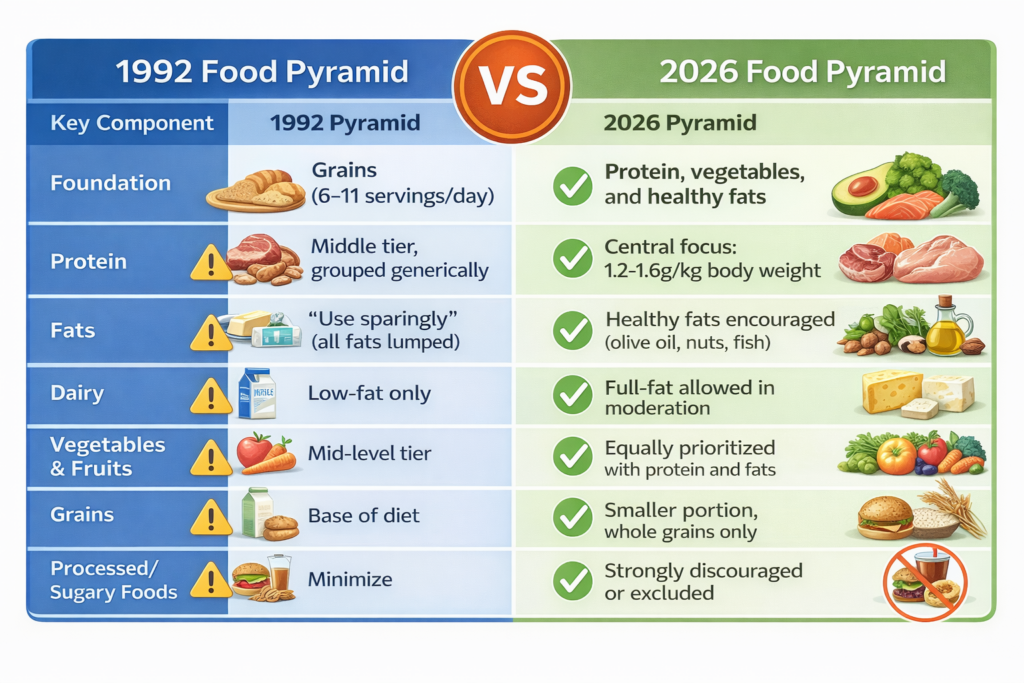
To fully understand the shift from the 1992 to the 2026 USDA food pyramid, it’s important to consider not just what foods are included, but how they are prioritized. The original pyramid built its foundation on high-carbohydrate intake, particularly from grains, and advised limiting fats. Protein and vegetables were given secondary importance. In contrast, the 2026 pyramid reflects modern scientific consensus, placing high-quality protein, healthy fats, and vegetables at the core of daily eating, and reducing emphasis on grains and processed foods.
This narrative comparison highlights the evolution:
- The 1992 pyramid emphasized grains (6–11 servings/day) as the base, discouraged fats entirely, and placed protein and vegetables in the mid-tier.
- The 2026 pyramid shifts the foundation to protein, vegetables, and healthy fats, recommends 1.2–1.6g/kg of protein, and limits both grains (only whole) and sugars.
The changes reflect an updated understanding of how diet influences metabolic health, muscle preservation, and inflammation, especially in adults over 50.
Scientific Rationale Behind the Shift
1. Increased Protein Requirements for Aging Adults
Aging is associated with a natural decline in muscle mass and strength, known as sarcopenia. Protein needs increase with age due to anabolic resistance, where muscle protein synthesis becomes less responsive to dietary protein. The 2026 pyramid recommends 1.2–1.6g/kg/day of protein to preserve muscle function and metabolic health in adults over 50. Older adults require more dietary protein to maintain physiological function and mitigate age-related muscle loss. [1]
2. Role of Healthy Fats in Cognitive and Cardiovascular Function
Previously generalized as harmful, fats are now categorized by type. Evidence shows that monounsaturated and omega-3 fatty acids support brain plasticity, reduce inflammation, and improve cardiovascular outcomes. The 2026 pyramid encourages fats from olive oil, fatty fish, nuts, and seeds while discouraging processed seed oils and trans fats. Monounsaturated and omega-3 fats provide neuroprotective and cardiovascular benefits. [2]
3. Carbohydrate Quality and Glycemic Control
The 1992 pyramid’s emphasis on grains, regardless of refinement, contributed to high glycemic load diets. In contrast, the new model limits carbohydrates to whole grain, fiber-rich options in moderate portions, paired with protein and fat to reduce postprandial glycemia. This reflects growing evidence linking refined carbs with inflammation, insulin resistance, and metabolic disease.
Refined carbohydrate intake is associated with increased inflammation and impaired glucose regulation in aging adults. [3]
4. Nutrient Density and Real Food Emphasis
The updated pyramid adopts a “real food first” approach, encouraging whole, minimally processed ingredients. Emphasis is placed on variety, fiber, phytonutrients, and fermentation to support gut health, immune function, and longevity.
Implications for Adults Aged 50–70
The changes in the 2026 pyramid are particularly relevant for older adults:
- Muscle preservation via higher protein intake
- Cognitive protection from healthy fats
- Blood sugar and inflammation control through low-glycemic, high-fiber diets
- Improved nutrient absorption from whole, real foods
These dietary shifts offer a practical, evidence-based strategy to reduce the risk of sarcopenia, cardiovascular disease, type 2 diabetes, and cognitive decline.
Final Thoughts:

The transition from the 1992 to the 2026 USDA food pyramid reflects decades of scientific progress. The outdated carbohydrate-heavy, fat-avoidant model has been replaced with a more balanced and functional approach.
By emphasizing protein, healthy fats, and real foods, the revised pyramid better addresses the physiological needs of aging adults and supports improved health outcomes.
Adoption of this model, in both individual and public health settings, could play a key role in enhancing health span and quality of life in populations over 50.
References:
- Smith-Ryan A, Kleiner SM, Jäger R, Collins R, Cooke M, Davis JN, Galvan E, Greenwood M, Lowery LM, Wildman R, Antonio J, Kreider RB. ISSN exercise & sports nutrition review update: research & recommendations. J Int Soc Sports Nutr. 2018 Aug https://www.ncbi.nlm.nih.gov/pmc/articles/PMC6090881/
- Jain AP, Aggarwal KK, Zhang PY. Omega-3 fatty acids and cardiovascular disease. Eur Rev Med Pharmacol Sci. 2015 https://pubmed.ncbi.nlm.nih.gov/25720716/
- Stoodley, I.L.; Berthon, B.S.; Scott, H.A.; Williams, E.J.; Wood, L.G. Protein Intake and Physical Activity Levels as Determinants of Sarcopenia Risk in Community-Dwelling Older Adults. Nutrients 2024, 16, 1380. https://www.mdpi.com/2072-6643/16/9/1380