
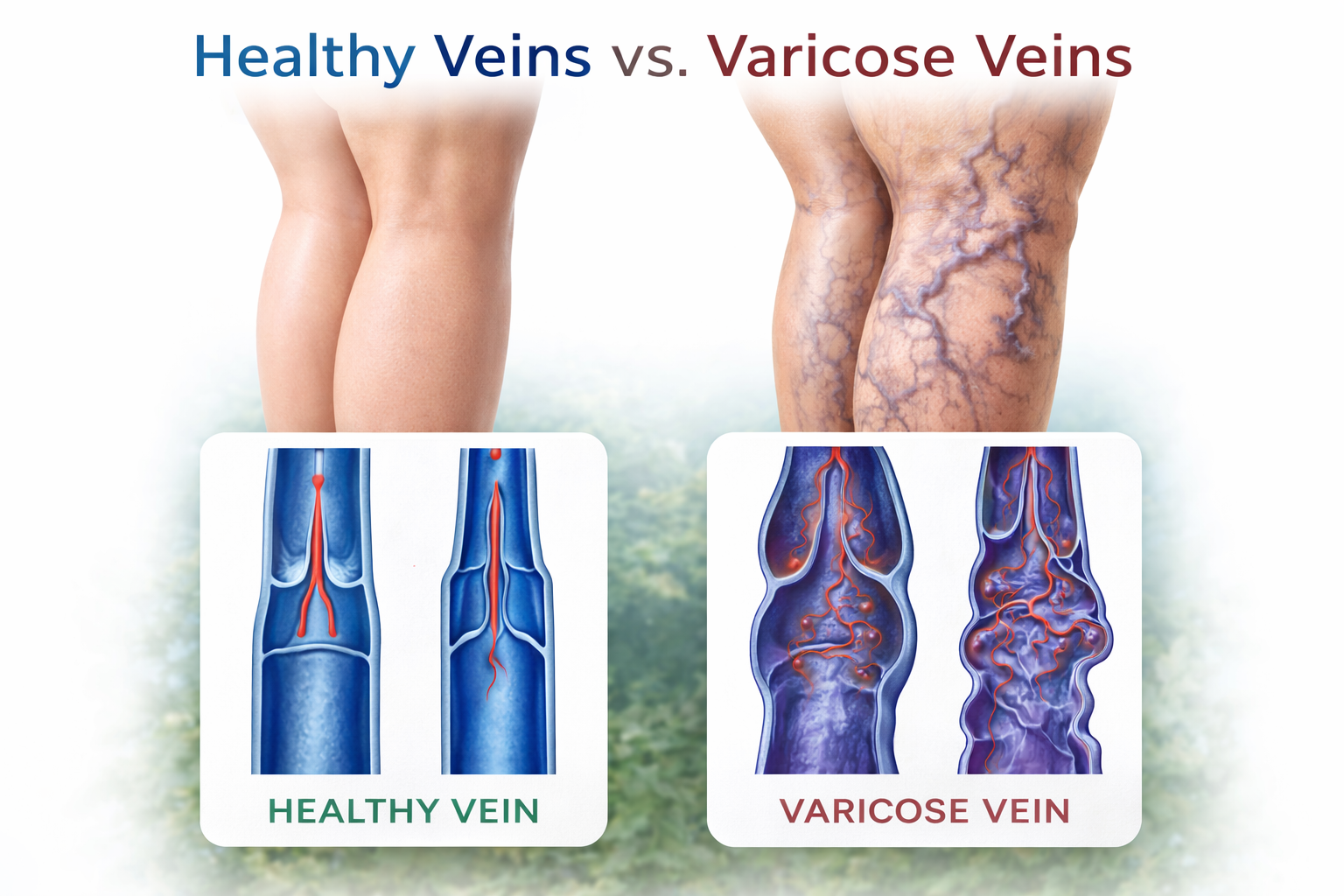
Valentine’s Day isn’t just for hearts, it’s also the perfect time to show some love to your legs. While often overlooked, leg health plays a critical role in your overall circulatory system. The veins in your legs work against gravity to return deoxygenated blood to the heart. If this process is compromised, it can lead to chronic discomfort, swelling, or even more serious vascular conditions such as chronic venous insufficiency (CVI) or deep vein thrombosis (DVT).
In this article, we’ll dive into the science behind circulation, explore daily habits and dietary strategies to promote vein health, and examine evidence-backed nutrients that support vascular integrity.
1. Why Leg Circulation Matters More Than You Think
Poor circulation in the legs can result from weakened valves, sedentary habits, or aging veins. Over time, blood can begin to pool in the lower limbs, causing a range of symptoms. These include swelling or edema, varicose and spider veins, cramping or heaviness, cold extremities, and in more severe cases, chronic venous insufficiency or blood clots. People most at risk often share common factors: long hours of sitting or standing, age-related changes, excess weight, hormonal shifts, a family history of vein issues, or smoking. [1]
To reduce your risk and protect vascular function, early lifestyle changes and attention to symptoms are essential.
2. Daily Habits That Support Healthy Circulation
Day-to-day habits can make a huge difference in how well your blood flows. Even minor adjustments help support vein function and relieve tired, heavy legs.
Here are a few worth integrating into your routine:
- Move around every hour if you sit or stand a lot.
- Elevate your legs for 10–15 minutes in the evening.
- Try compression socks during work or travel.
- Stay hydrated to keep blood from thickening.
- Choose flexible, supportive footwear to avoid vein compression.
These small but impactful practices can reduce the strain on your legs and promote long-term vascular comfort. [2]

3. Foods That Strengthen Vascular Integrity
Nutrition also plays a role in vein health. Many foods naturally support circulation by reducing inflammation and strengthening blood vessel walls.
For stronger veins and smoother flow, consider:
- Berries: Their anthocyanins protect capillaries from oxidative stress.
- Leafy greens: Rich in vitamin K for clotting support and vessel resilience.
- Beets: Boost nitric oxide production for better blood flow.
- Garlic and onions: Provide natural compounds to relax blood vessels.
- Citrus fruits: Offer flavonoids like hesperidin that benefit vein structure.
Incorporating these foods consistently may help protect your vascular system over time. [3]
4. Key Nutrients and Botanical Compounds for Vascular Health
Some nutrients and plant-based compounds are especially beneficial for leg circulation. These can be found in targeted supplements or therapeutic diets and have shown promise in clinical studies.
A few research-backed ingredients include:
- Diosmin & Hesperidin are flavonoids derived from citrus peels, known for improving venous tone and reducing symptoms such as leg heaviness and swelling. Their effectiveness in treating chronic venous insufficiency is well-documented in clinical reviews, including a 2020 analysis published in the Cochrane Database of Systematic Reviews. [1]
- Horse Chestnut Extract contains aescin, a compound shown to support vein tone, reduce capillary permeability, and alleviate swelling. Its benefits in managing chronic venous insufficiency were confirmed in a study published in Archives of Dermatology, which demonstrated improvements in swelling and pain. [2]
- Butcher’s Broom has been traditionally used to relieve tension and strengthen vein walls. This traditional remedy has been validated by clinical research, including a 2002 study. [3]
- Vitamin C: Essential for collagen production and capillary flexibility.
- Vitamin E and bioflavonoids: Help guard veins against oxidative damage
These nutrients may offer a boost to your vein care strategy, especially when paired with consistent exercise and proper nutrition.
5. Evidence-Based Exercises for Improved Circulation
Physical activity enhances circulation by stimulating the calf muscles, often referred to as the body’s “second heart”, to pump blood upward from the legs.
Add these movement-based habits to your week:
- Walk briskly for 20–30 minutes a day to activate your calf muscles.
- Try gentle yoga or stretching in the morning to improve blood flow.
- Use a mini trampoline or rebounder for a few minutes daily.
- Do ankle circles or heel raises while sitting to reduce stagnation.
- Elevate your legs against a wall for 5–10 minutes after long periods of sitting.
These activities keep blood flowing smoothly and support overall cardiovascular and leg health.
Final Thoughts:

Your legs play a vital role in your cardiovascular health, mobility, and comfort. Supporting their circulatory and vascular function can have a wide-reaching impact on your well-being. Through consistent movement, anti-inflammatory nutrition, and evidence-backed compounds, you can protect your legs against chronic venous issues.
This Valentine’s Day, take the opportunity to care for yourself, starting from the ground up.
References:
- Martinez-Zapata, M.J.; Vernooij, R.W.M.; Uriona Tuma, S.M. et al. Diosmin for treating chronic venous insufficiency. Cochrane Database of Systematic Reviews 2020. https://pubmed.ncbi.nlm.nih.gov/33141449/
- Pittler, M.H.; Ernst, E. Horse-chestnut seed extract for chronic venous insufficiency. Arch Dermatol. 1998 Nov;134(11):1356–60. https://pubmed.ncbi.nlm.nih.gov/9828868/
- Vanscheidt W, Jost V, Wolna P, Lücker PW, Müller A, Theurer C, Patz B, Grützner KI. Efficacy and safety of a Butcher’s broom preparation (Ruscus aculeatus L. extract) compared to placebo in patients suffering from chronic venous insufficiency. Arzneimittelforschung. 2002. https://pubmed.ncbi.nlm.nih.gov/12040966/