
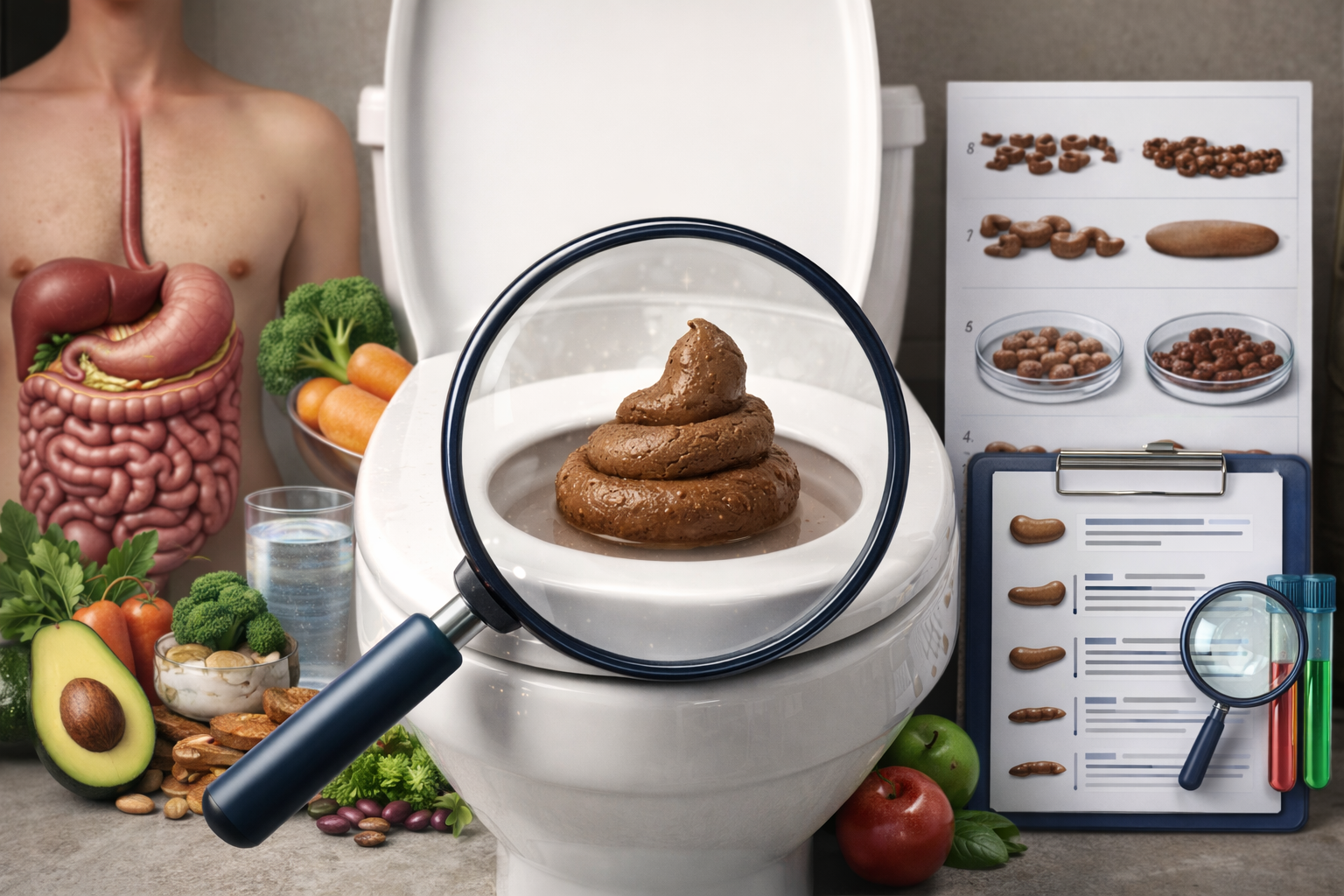
Poop. It’s one of the most important indicators of your digestive health, yet it’s often overlooked. The size, shape, color, and consistency of bowel movements can provide valuable insight into how your gastrointestinal system is functioning. As part of the body’s waste elimination process, feces can reflect dietary habits, hydration status, gut microbiota balance, and even underlying health conditions.
In this article, we’ll explore the scientific foundations behind what constitutes healthy bowel movements, how stool characteristics are evaluated in clinical practice, and what changes may signal a need for further investigation.
The Bristol Stool Form Scale: A Clinical Evaluation Tool
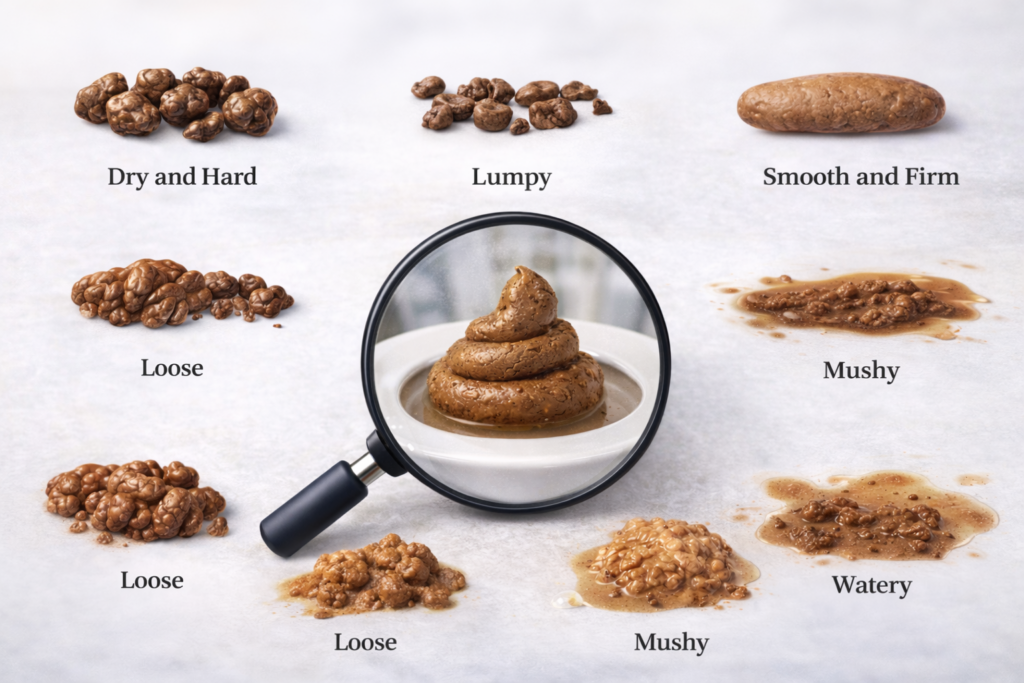
Developed in 1997 by Dr. Ken Heaton at the University of Bristol, the Bristol Stool Form Scale (BSFS) is widely used in both research and clinical settings to classify human feces into seven distinct types based on appearance [1]:
Type 1: Separate hard lumps, like nuts: typically a sign of severe constipation
Type 2: Sausage-shaped but lumpy: indicates mild constipation
Type 3: Like a sausage with surface cracks: considered within the normal range
Type 4: Smooth and soft, like a snake: ideal stool form in healthy individuals
Type 5: Soft blobs with clear-cut edges: may suggest insufficient fiber intake
Type 6: Fluffy pieces with ragged edges: mild diarrhea
Type 7: Watery, no solid pieces: indicative of severe diarrhea or rapid intestinal transit
Clinical guidelines often consider Types 3 and 4 as optimal for adults, as these forms reflect normal colonic transit time and hydration status.
Stool Color and What It Indicates
The color of stool is primarily influenced by bile pigments and the metabolic activity of gut microbiota. However, certain shades can reflect dietary patterns or potential pathology:
- Brown: Normal, due to stercobilin (a bile pigment derivative)
- Green: May result from rapid transit or high chlorophyll intake (e.g., leafy greens)
- Yellow: Possible fat malabsorption or bile salt insufficiency
- Black (Melena): Could indicate upper gastrointestinal bleeding or ingestion of iron supplements
- Red: May reflect lower GI bleeding or be food-related (e.g., beets)
- Pale or clay-colored: May suggest biliary obstruction or liver dysfunction
Persistent changes in stool color should be evaluated by a healthcare provider, especially when accompanied by other symptoms.
Frequency and Transit Time
Normal bowel movement frequency varies widely between individuals. According to the American Gastroenterological Association, a range of three times per day to three times per week is considered physiologically normal. [2] However, consistent patterns outside this range, especially if accompanied by straining, discomfort, or urgency, may indicate gastrointestinal dysregulation.
Transit time (the time it takes for food to move through the digestive tract) is another key marker. Prolonged transit may result in harder, drier stools, while rapid transit can lead to loose or watery stools.
Factors Influencing Stool Quality
Multiple physiological and lifestyle factors affect stool consistency and regularity:
- Dietary Fiber: Insoluble fiber increases stool bulk, while soluble fiber helps retain moisture.
- Hydration: Adequate water intake is essential to soften stool and facilitate smooth passage.
- Gut Microbiota: The composition and diversity of intestinal bacteria play a role in fermentation, stool formation, and motility. [3]
- Physical Activity: Regular movement promotes intestinal peristalsis.
- Hormones and Stress: Stress hormones like cortisol can alter gut motility and microbial balance.

Observational Tips for Health Monitoring
Monitoring bowel habits can serve as a non-invasive way to assess internal health. Key signs to track include:
- Changes in frequency, form, or color
- Presence of undigested food particles
- Excess mucus or blood
- Sensation of incomplete evacuation
- Changes associated with dietary shifts, travel, or medication use
Although occasional changes are normal, persistent alterations should be discussed with a healthcare provider, particularly if they are accompanied by abdominal pain, fatigue, weight loss, or systemic symptoms.
Final Thoughts:

Stool is more than just waste, it’s a reflection of your body’s internal processes, especially gastrointestinal health. By observing and understanding the characteristics of your bowel movements, you can gain valuable insights. into diet adequacy, microbiome balance and hydration status.
References:
- Heaton, K. W., & Lewis, S. J. (1997). Stool form scale as a useful guide to intestinal transit time. Scandinavian Journal of Gastroenterology, 32(9), 920–924. https://www.tandfonline.com/doi/abs/10.3109/00365529709011203
- Rao, S. S. C. (2004). Constipation: Evaluation and treatment. Archives of Internal Medicine, 164(17), 1761–1768. https://pubmed.ncbi.nlm.nih.gov/12858610/
- Sonnenburg, J. L., & Bäckhed, F. (2016). Diet–microbiota interactions as moderators of human metabolism. Nature, 535(7610), 56–64. https://www.nature.com/articles/nature18846