
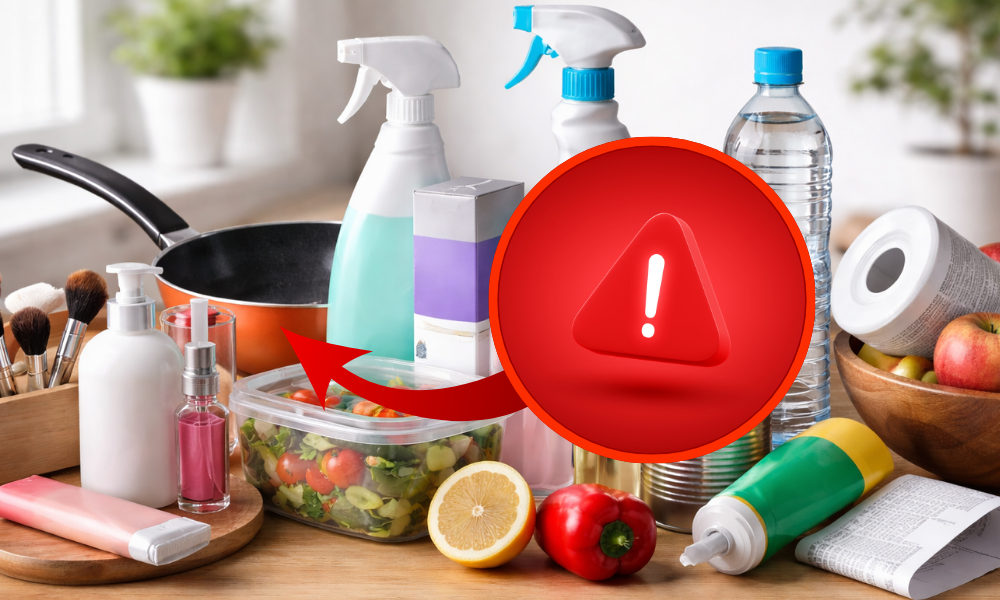
Every day, we are exposed to a wide range of synthetic chemicals, through the food we eat, the air we breathe, and the products we use on our bodies and in our homes. While many of these substances serve practical purposes, a growing body of scientific research shows that certain common chemicals can interfere with the body’s hormonal systems, potentially leading to long-term health consequences.
These substances, known as endocrine disrupting chemicals (EDCs), can mimic, block, or alter the body’s natural hormone signals. Emerging evidence links EDC exposure to a variety of hormone-related health issues, including thyroid dysfunction, reproductive problems, metabolic disturbances, and developmental abnormalities.
Understanding what EDCs are, where they’re found, and how to limit exposure is key to supporting hormonal health across the lifespan.
What Are Endocrine Disrupting Chemicals (EDCs)?
The endocrine system is a network of glands that produce hormones, chemical messengers that regulate metabolism, growth, reproduction, and mood. EDCs are exogenous (external) chemicals that interfere with this system by:
- Mimicking natural hormones (e.g., estrogens, androgens, thyroid hormones)
- Blocking hormone receptors
- Altering hormone synthesis, metabolism, or elimination
These disruptions can have wide-ranging effects, particularly during critical periods such as fetal development, puberty, and menopause.
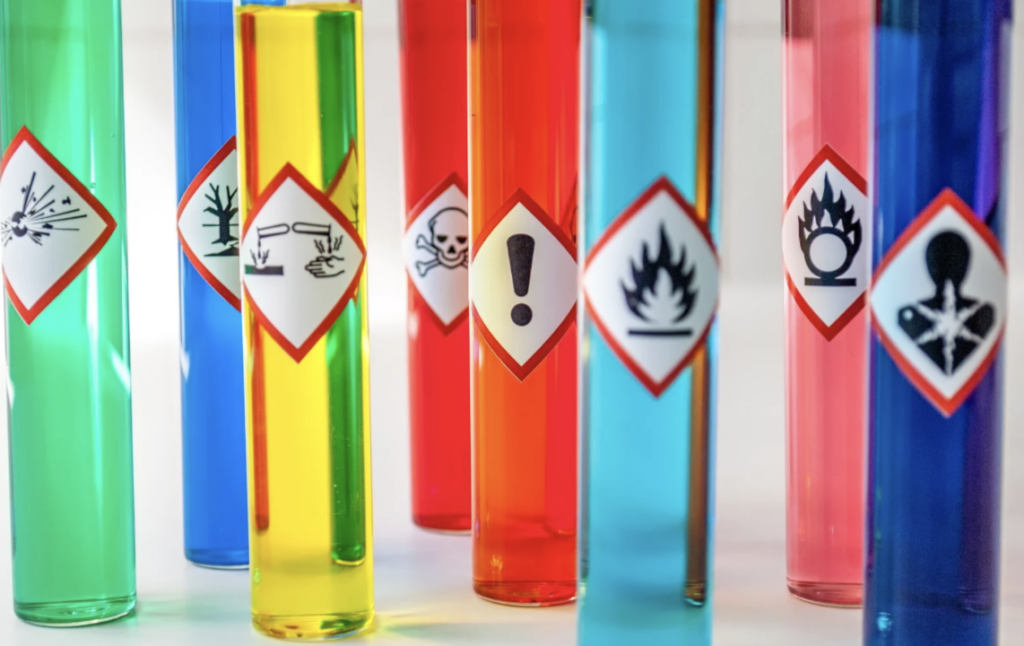
Common Sources of EDCs in Daily Life
Although EDCs are diverse in structure and function, several well-known categories are found in everyday environments.
1. Plastics and Food Packaging
- Bisphenol A (BPA) is commonly used in polycarbonate plastics and epoxy resins, such as in water bottles and canned food linings.
- BPA is an estrogen mimic and has been associated with reproductive abnormalities and metabolic effects in both animal and human studies [1].
2. Personal Care and Beauty Products
- Parabens (preservatives) and phthalates (fragrance stabilizers) are frequently found in cosmetics, lotions, and shampoos.
- These compounds are known to penetrate the skin and have been detected in human urine and blood. Studies have associated paraben exposure with altered reproductive hormone levels [2].
3. Household Cleaners and Air Fresheners
- Many cleaning agents and fragranced products contain chemicals such as synthetic musks or alkylphenols, which may interfere with hormone receptor activity.
- These compounds can persist in household dust and indoor air, contributing to chronic low-level exposure [3].
4. Pesticides and Herbicides
- Agricultural chemicals like atrazine and glyphosate have demonstrated endocrine-disrupting potential in laboratory studies.
- For instance, atrazine exposure has been linked to feminization and reproductive changes in amphibians, raising concerns about its effects in humans [4].
Health Impacts of Endocrine Disruptors
The health effects of EDC exposure are influenced by dose, timing, duration, and individual susceptibility. Unlike many toxins, EDCs can exert effects even at very low doses, particularly when exposure occurs during critical windows of development.
Research suggests links between EDCs and:
- Reproductive disorders: Reduced sperm quality, early puberty, menstrual irregularities
- Thyroid dysfunction: Interference with thyroid hormone production and regulation
- Metabolic effects: Increased risk of obesity, insulin resistance, and type 2 diabetes
- Neurodevelopmental effects: Potential contribution to ADHD and cognitive deficits in children
How to Reduce EDC Exposure?
While regulatory reform is ongoing, individuals can take several science-based steps to limit their exposure to endocrine-disrupting chemicals:
🧴 Choose Safer Personal Care Products
- Select products labeled “paraben-free” and “phthalate-free”
- Avoid products with generic “fragrance” on the label
🧽 Use Low-Toxicity Household Cleaners
- Choose unscented or naturally scented cleaners
- Minimize use of aerosol sprays and synthetic air fresheners
🥗 Focus on Clean Food Practices
- Limit consumption of canned foods
- Choose fresh or frozen options when possible
- Wash fruits and vegetables thoroughly; opt for organic varieties when feasible
🧊 Avoid Plastic for Food and Drink Storage
- Store food in glass or stainless steel containers
- Do not microwave plastic containers
💧 Filter Tap Water
- Consider a high-quality water filter that removes industrial chemicals, pesticides, and pharmaceuticals
Final Thoughts:

Endocrine disrupting chemicals are an invisible but significant part of the modern environment. While their full effects are still being studied, current research strongly suggests that minimising exposure is a prudent step toward preserving hormonal balance.
Reducing EDC exposure doesn’t require perfection, just a series of informed, consistent choices. Over time, these small adjustments can support endocrine health and reduce potential risk factors for hormone-related conditions.
References:
- Rochester, J.R. (2013). Bisphenol A and human health: A review of the literature. Reproductive Toxicology, 42, 132–155. https://doi.org/10.1016/j.reprotox.2013.08.008
- Boberg, J., Taxvig, C., Christiansen, S., Hass, U. (2010). Possible endocrine disrupting effects of parabens and their metabolites. Reproductive Toxicology, 30(2), 301–312. https://doi.org/10.1016/j.reprotox.2010.03.011
- Rudel, R.A., Camann, D.E., Spengler, J.D., Korn, L.R., Brody, J.G. (2003). Phthalates, alkylphenols, pesticides, polybrominated diphenyl ethers, and other endocrine-disrupting compounds in indoor air and dust. Environmental Science & Technology, 37(20), 4543–4553. https://doi.org/10.1021/es0264596
- Hayes, T.B., Khoury, V., Narayan, A., Nazir, M., Park, A., Brown, T., Adame, L., Chan, E. (2010). Atrazine induces complete feminization and chemical castration in male African clawed frogs (Xenopus laevis). Proceedings of the National Academy of Sciences, 107(10), 4612–4617. https://doi.org/10.1073/pnas.0909519107