
Some women reach their 60s and still get asked which products they use. Not because of filters or procedures. Just skin that looks genuinely firm, even, and alive.
You’ve probably noticed it with certain celebrities. Women well into their 50s and 60s whose skin looks nothing like their age. No dramatic interventions you can point to. Just skin that looks quietly, consistently healthy. Many of them have one thing in common: peptides.
💡Dermatologists, longevity researchers, and cellular biologists are all arriving at the same conclusion from different directions: peptides may be the most significant development in skin science in decades.
But most people asking what peptides celebrities are using are missing the more important question. It’s not which peptide. It’s why peptides work when almost everything else doesn’t.
A physician recently uncovered something inside cellular hydration research that changes how this question gets answered entirely. What he found has nothing to do with what you’re putting on your face.

Why Skin Ages Faster in Some People Than Others
Skin aging is not just time passing. It’s a biological process happening inside your cells, and the pace varies significantly from person to person.
Your skin’s structure depends on two proteins: collagen and elastin. Collagen gives skin firmness and density. Elastin gives it the ability to bounce back. Together, they are what make young skin look young.
Starting around age 25, the body produces less of both. By 40, collagen production has declined by roughly 1% per year for over a decade. By 50, many women have lost a significant portion of the structural scaffolding that once held their skin firm.
🔍 But here’s what most people don’t know: this process is not fixed.
Chronic inflammation, poor sleep, blood sugar dysregulation, and one specific cellular mechanism most skincare conversations never reach can all accelerate visible aging by years.
Aging skin is not just older skin. It’s skin that has lost its ability to communicate with itself properly. That’s where peptides come in.
What Does Taking Peptides Actually Do for You?
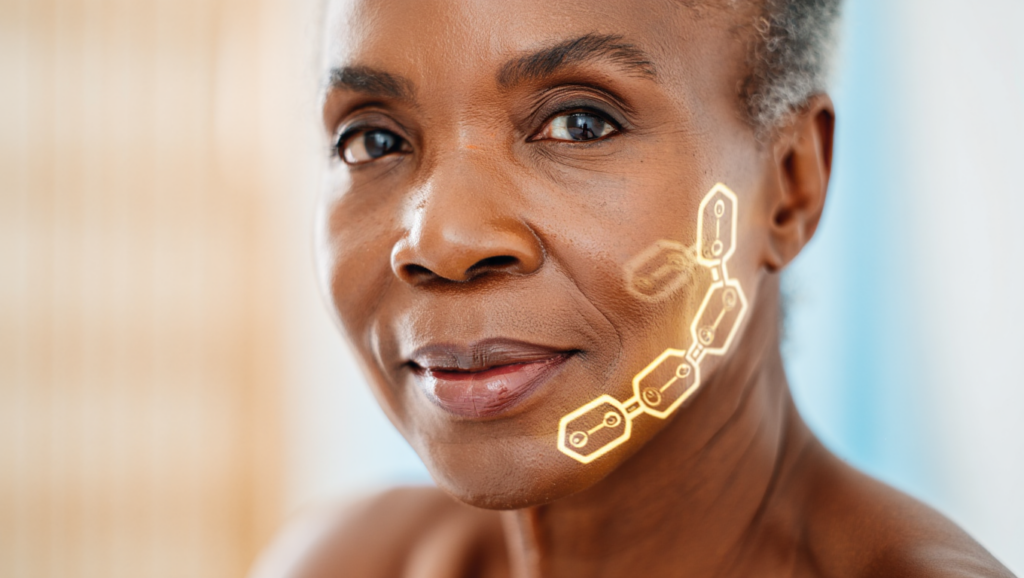
💡Peptides are short chains of amino acids that function as messenger signals between cells.
Different sequences send different instructions. Signal peptides tell fibroblasts to produce more collagen. Carrier peptides deliver trace minerals like copper to sites of cellular repair. Enzyme-inhibiting peptides block the breakdown of existing collagen. Neurotransmitter peptides reduce the micro-muscle contractions that deepen expression lines over time.
When you take peptides, topically or internally, you are not adding a cosmetic layer to your skin. You are sending biological instructions to cells that have slowed down with age.
This is why peptides behave differently than most skincare ingredients. Vitamin C brightens. Retinol speeds up cell turnover. Peptides tell the deeper machinery of your skin to start rebuilding.
Most people using high-quality peptides notice meaningful changes in firmness and hydration within 8 to 12 weeks, with continued improvement beyond that. This is not a quick fix. It’s a biological process being restarted.
See a short video that explains everything →
Is It Safe to Take Peptides Every Day?
💧For the peptides used in skin and longevity research, daily use is both common and well supported. Collagen peptides and signal peptides have strong safety profiles in human studies and are processed through normal metabolic pathways without unusual burden on the liver or kidneys.
A few combinations worth knowing. Highly acidic vitamin C serums applied at the same time as topical peptides can reduce their effectiveness due to pH changes. Apply them at different times, or use a buffered vitamin C form. Peptides taken right before meals alongside digestive enzymes may be partially broken down before absorption. Taking them on an empty stomach produces the best results.
The most common reason people try collagen peptides and notice nothing is poor absorption. Molecular weight below 5,000 daltons is the threshold where absorption improves meaningfully. Most cheap collagen powders don’t meet this standard.
The Top Peptides for Skin
1. Matrixyl (Palmitoyl Pentapeptide-4) One of the most studied signal peptides for collagen synthesis, shown to stimulate collagen I, III, and IV production in fibroblasts over 12 weeks of consistent use.
2. Argireline (Acetyl Hexapeptide-3) Inhibits the neurotransmitter signals that cause repeated facial muscle contractions, reducing the micro-movements that deepen expression lines. Works most noticeably around the forehead and eye area.
3. Copper Peptides (GHK-Cu) Essential for collagen cross-linking, the process that makes collagen fibers structurally strong rather than just present. Declines significantly with age. Research confirms it stimulates skin repair, reduces dermal inflammation, and supports blood vessel formation that brings nutrients to skin cells.
4. Hydrolyzed Collagen Peptides (Types I and III) Ingestible and backed by multiple peer-reviewed studies confirming improvements in skin hydration, elasticity, and dermal collagen density at 2.5 to 10 grams daily. They work from the inside in ways topical application cannot replicate.
5. Snap-8 (Acetyl Octapeptide-3) A newer generation neurotransmitter-inhibiting peptide with stronger preliminary evidence than Argireline for reducing the depth of expression lines over consistent use.
Are Peptides Good for Crepey Skin? Can Sagging Skin Firm Up Again?
These are among the most common questions women over 60 ask, and the honest answer is more encouraging than most expect.
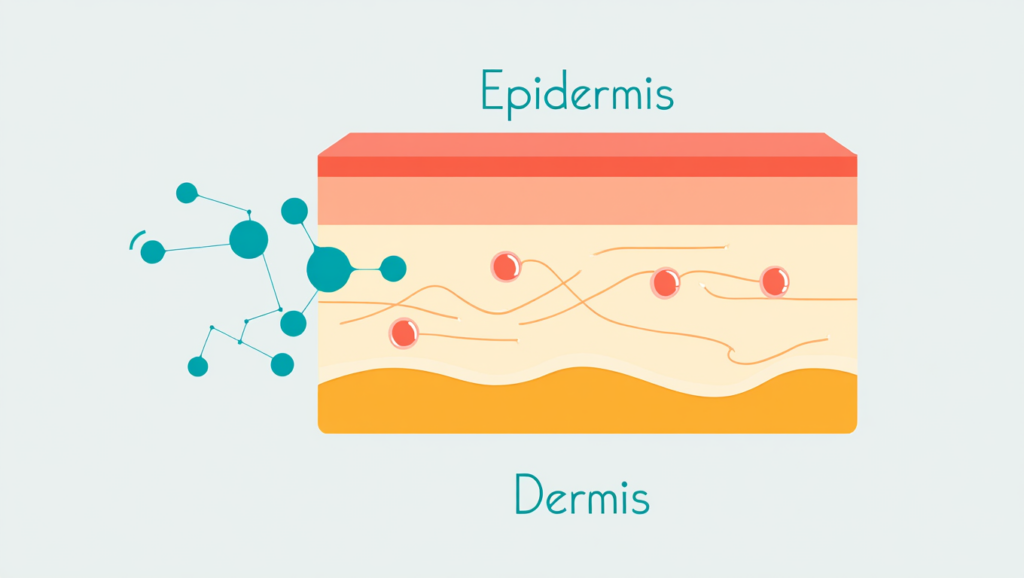
💡Crepey skin has two primary drivers. Collagen and elastin loss removes the scaffolding that keeps skin plump and smooth. Loss of intracellular hydration causes skin cells to shrink slightly, making the surface look thin and papery rather than full.
Peptides address the first driver directly. Signal peptides that stimulate collagen and elastin production can meaningfully improve skin texture over time, including on the body, not just the face. Crepey skin on the legs, arms, and décolletage responds to the same mechanisms as facial skin, just more slowly.
Can sagging skin become firm again? Partially, yes. Research consistently shows that collagen-stimulating interventions can measurably improve firmness and elasticity over 3 to 6 months. The process takes time because it is rebuilding actual tissue, not coating the surface.
What do peptides do for older skin specifically? They address three things that become increasingly important after 50: slowing collagen breakdown, stimulating new collagen production, and improving the cellular signaling that keeps skin repairing itself efficiently.

Signs Your Skin May Be Aging Faster Than It Should
🔍 Biological skin age and chronological age are not always the same number.
Common signs the skin’s internal processes may need attention:
- Skin that looks dull even when well rested
- Fine lines that have deepened noticeably in the past year or two
- Persistent dryness regardless of how much moisturizer you apply
- Loss of firmness along the jaw or around the eyes
- Uneven tone that wasn’t there five years ago
- Slower recovery after sun exposure or a poor night’s sleep
- A general flatness or lack of glow that no topical product seems to fix
These experiences are common in midlife. But common does not mean inevitable.
What to Eat Daily for Younger-Looking Skin
Food is information for your skin cells. What you eat either supports or degrades the cellular processes that keep skin firm, hydrated, and even.
🐟 Fatty fish, three to four times a week. Salmon, sardines, and mackerel are rich in omega-3s that directly support cell membrane integrity. Healthy membranes hold water better, which translates directly to more hydrated-looking skin. If fish isn’t daily, a high-quality fish oil supplement fills the gap.
🫐 Berries daily. Blueberries and blackberries contain anthocyanins that protect collagen from oxidative damage and support circulation in the dermis. One cup is enough.
🥚 Eggs daily or near-daily. Rich in biotin for skin cell turnover and lutein for UV protection from the inside. One of the most underrated skin foods available.
🥦 Cruciferous vegetables, at least one serving. Broccoli and cauliflower activate the Nrf2 pathway, the body’s internal antioxidant system, which directly reduces the oxidative stress that degrades collagen over time. Steam lightly rather than boiling to preserve active compounds.
🫒 Extra virgin olive oil as your primary fat. Contains oleocanthal with anti-inflammatory properties that work systemically. Two to three tablespoons daily, consistent with what researchers observe in long-lived Mediterranean populations.
🍵 Green tea, one to two cups daily. EGCG supports cellular autophagy, the clean-up process that clears damaged skin cells and supports renewal. One of the most researched longevity compounds available in a daily food.
🌰 Mixed nuts, a small handful daily. Walnuts in particular are rich in zinc and omega-3 precursors associated with reduced inflammation and better skin cell repair.
Eat less of:
Ultra-processed foods, which drive the systemic inflammation quietly degrading skin tissue from within. Refined sugar, the primary driver of glycation and collagen stiffening. Alcohol, which depletes zinc and B vitamins required for skin cell turnover.
DIY Skin Recipes That Actually Have Biology Behind Them
You don’t need a spa or an expensive treatment to give your skin meaningful support at home. These two recipes use ingredients with real research behind them and take less than five minutes.
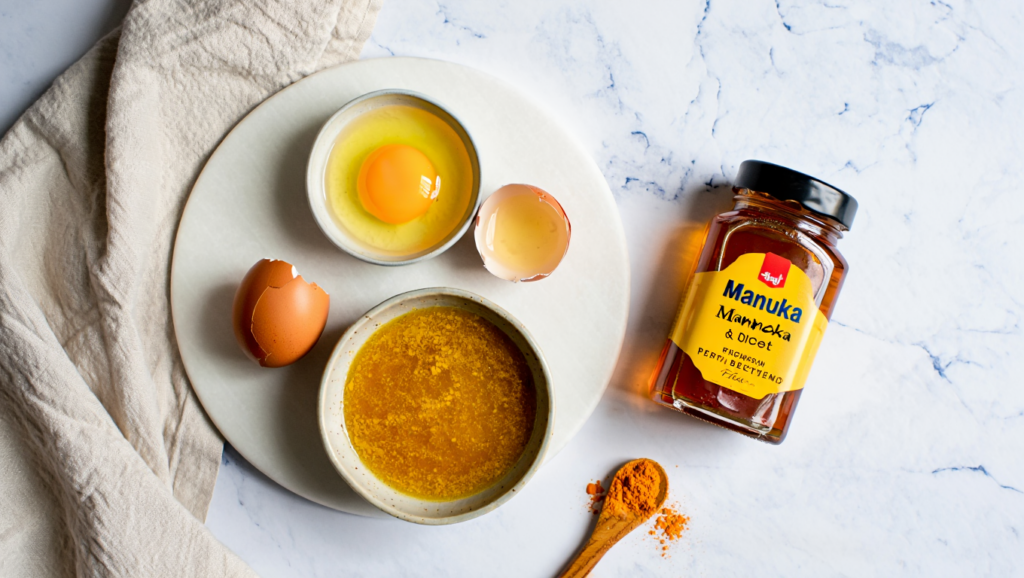
The Collagen-Signal Face Mask
This mask works on three levels simultaneously. Turmeric reduces dermal inflammation. Raw honey draws moisture into the skin barrier and has antimicrobial properties that support the skin microbiome. Egg white delivers glycoproteins that temporarily support the appearance of firmness while the deeper ingredients do their work.
Overview A 3-ingredient mask that reduces dermal inflammation, draws moisture into the skin barrier, and supports the appearance of firmness. Use 2 to 3 times a week.
Servings: 1
Ingredients
- 1 tablespoon raw honey (Manuka if possible)
- ½ teaspoon ground turmeric
- 1 egg white 🥚
Instructions
- Mix. Whisk the egg white until slightly frothy, then stir in the honey and turmeric until fully combined with no dry turmeric pockets.
- Apply. Apply evenly across the face and neck using clean fingertips, avoiding the eye area.
- Rest. Leave on for 15 minutes. You will feel a mild tightening sensation as the egg white sets.
- Rinse. Rinse thoroughly with cool water, not hot. Apply your moisturizer or peptide serum immediately while skin is still slightly damp to lock in hydration.
📝 Notes
- Add one teaspoon of plain full-fat yogurt for an enhanced version. The lactic acid gently exfoliates and improves active ingredient penetration after the mask is removed.
- Patch test first if you have sensitive skin.
- Turmeric may leave a faint yellow tint on very fair skin. A gentle cleanser removes it completely.
Skin-From-Within Morning Drink
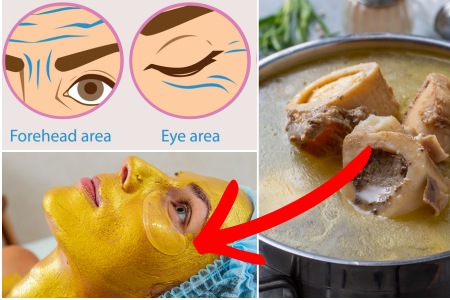
Bone broth provides hydrolyzed collagen peptides in their most bioavailable form. Lemon delivers the vitamin C required to convert those peptides into usable collagen. Ginger helps reduce systemic inflammation. Sea salt provides trace minerals that support how well your skin cells retain water at the cellular level.
Taken on an empty stomach, absorption is significantly better than with a meal.

Overview A targeted collagen and hydration drink that supports skin from the inside. Takes 2 minutes and works best first thing in the morning on an empty stomach.
Servings: 1
Ingredients
- 1 cup warm bone broth (chicken or beef, slow-simmered)
- ½ lemon, juiced
- 1 teaspoon fresh ginger, grated (or ¼ teaspoon ground)
- 1 pinch sea salt or Himalayan pink salt
- 1 teaspoon raw honey (optional)
Instructions
- Warm the broth. Warm 1 cup of bone broth until hot but not boiling. Boiling may degrade peptide structures. Aim for around 70 to 80°C, similar to a comfortable sipping tea.
- Combine ingredients. Stir in lemon juice, grated ginger, and sea salt. Add raw honey last if using.
- Drink and wait. Drink slowly over 5 to 10 minutes. Wait at least 20 minutes before eating breakfast to allow collagen peptides to absorb without competing with other dietary proteins.
📝 Notes
- For an enhanced version, stir in a collagen peptide supplement alongside the broth.
- Consistency matters more than perfection. Five mornings a week for 8 weeks produces more noticeable results than daily use for two weeks.
- Look for bone broth that has been slow-simmered for at least 12 hours, as shorter cooking times contain significantly less collagen.
Habits That Compound Peptide Results
1. Sleep on your back. Repeated compression of the face against a pillow over years contributes to permanent creasing. A silk pillowcase is the easier alternative for those who can’t change sleep position.
2. Two minutes of facial massage daily. Light upward strokes along the jaw and cheekbones stimulate lymphatic drainage and microcirculation, increasing nutrient delivery to skin cells and reducing the puffiness that comes from stagnant lymphatic flow.
3. Cold water on your face in the morning. Thirty seconds constricts blood vessels and triggers a rebound vasodilation that improves circulation. It also reduces morning cortisol, one of the primary internal drivers of collagen breakdown.
4. Get outside within 10 minutes of waking. Morning light anchors the circadian rhythm, which directly regulates the timing of skin cell turnover and cellular repair throughout the rest of the day.
5. Eat protein before carbohydrates. Research found that eating protein and fat before carbohydrates at the same meal blunts the blood sugar spike by up to 37%. Stable blood sugar means less glycation, and glycation is one of the primary ways excess sugar silently stiffens and damages collagen over time.
What Researchers Are Uncovering About Skin at the Cellular Level
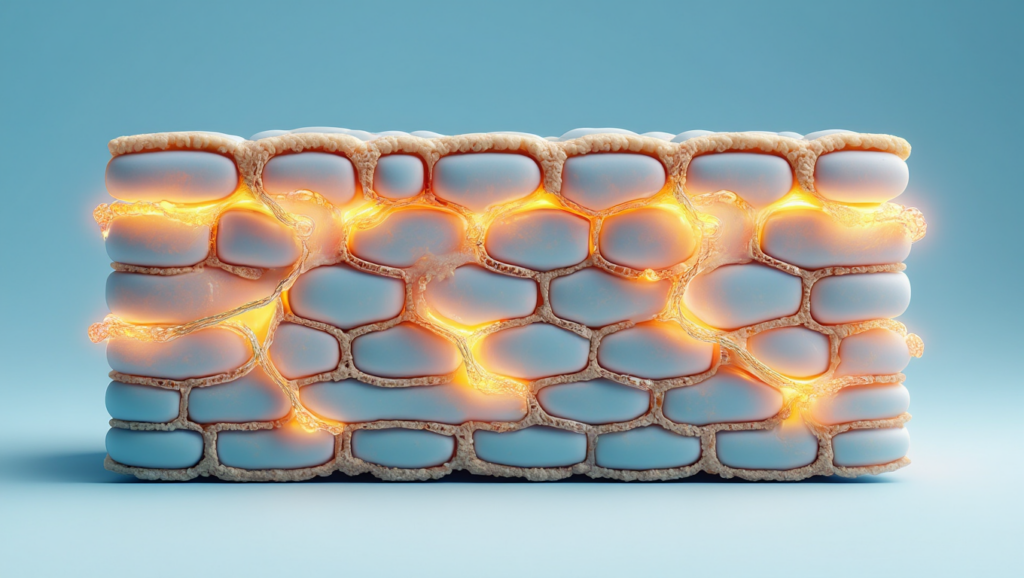
The habits above form the foundation. But researchers studying skin aging at the cellular level have been exploring something deeper: a mechanism quietly accelerating visible aging in many women long before surface signs appear.
🔍 It has to do with how well skin cells hydrate at the membrane level, and the specific signals required to restore that function.
For women doing everything right, taking collagen, eating well, using peptide serums, sleeping enough, and still watching their skin age faster than expected, this may be the piece that changes how they understand the process entirely.
A physician recently uncovered something inside cellular hydration research that most skincare conversations never reach. What he found points to a mechanism happening inside your skin cells that no topical product addresses.
Final Thoughts:

The skin that turns heads at 60 didn’t get that way from one product or one peptide. It got that way because the habits that support deep skin health compound quietly over years. The research is clear. Skin aging is not fixed. It is influenced day by day by choices most people never connect to how they look.
💡And the gap between women who age visibly faster and those who don’t is far less about genetics than most assume. Peptides are one of the most powerful tools now available. But they work best when the internal environment supports them. Start with one change. Make it consistent. Then add another.
And if you’ve been doing the right things and still feel like something is working against you beneath the surface, it may be worth looking at what researchers have recently uncovered about what else drives skin aging at the cellular level.