
Your hair is one of the most visible reflections of what’s happening inside your body, and it’s usually the last thing people think about until something changes. A wider part. More strands on the brush. A ponytail that doesn’t feel quite as full as it used to.
Poor nutrition, chronic stress, disrupted sleep, and everyday environmental exposures can all quietly affect how hair looks and grows over time. The good news is that supporting healthy hair often comes down to simple, consistent habits. In this article, we’ll explore a practical, nature-inspired routine to help support stronger, healthier-looking hair.
💡Hair Loss Goes Deeper Than You Think
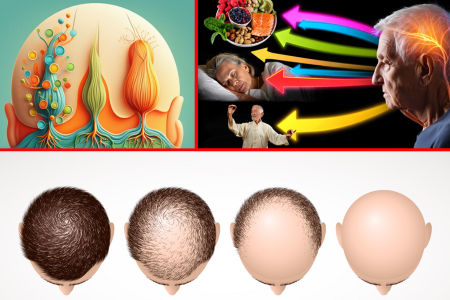
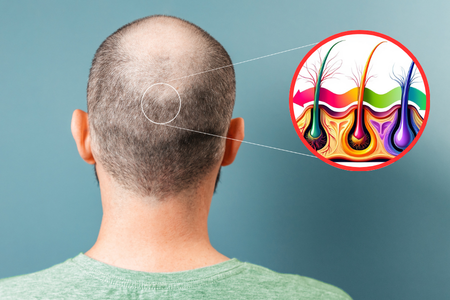
Hair grows from follicles embedded in the scalp, each one a small but complex structure that depends on circulation, nutrients, and a balanced scalp environment to function properly.
Each follicle goes through a natural growth cycle:
- Anagen, the active growth phase, lasting 2–7 years
- Catagen, a short transitional phase
- Telogen, the resting phase, after which the hair sheds and the cycle begins again
When something disrupts this cycle, whether through nutrient deficiency, hormonal shifts, inflammation, or poor scalp circulation, hair may shed faster than it regrows, or grow back thinner and weaker than before.
Because the follicle is a living structure, it responds to what’s happening in the body. Supporting your overall health is one of the most effective ways to support your hair.
🔍 Signs Your Hair May Benefit From Extra Support
Hair rarely sends dramatic warning signals. More often, changes are subtle and easy to dismiss.
Common signs your hair health may benefit from closer attention:
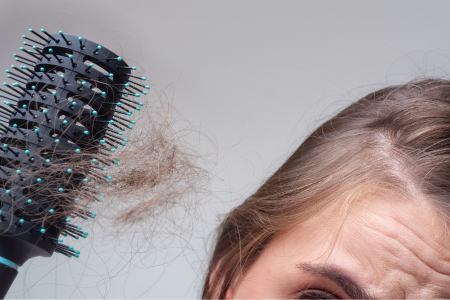
- More strands left behind after brushing or washing
- Hair that sits flatter or feels less dense than it used to
- A part that looks visibly wider in photos
- Slower regrowth after shedding
- Hair that breaks more easily or lacks its usual shine
- A scalp that feels tight, dry, or occasionally tender
These experiences can have many causes, but they often signal that the body and scalp environment may benefit from more consistent supportive habits.
If you’ve been noticing these signs for a while and aren’t sure what’s driving them, researchers may have found something worth looking at.
👩🦰 A Gentle Daily Routine to Support Healthy Hair
1. Start Your Morning With Hydration
The scalp, like all tissue in the body, depends on adequate hydration to function well. Dehydration can affect circulation to the scalp and the delivery of nutrients to hair follicles, often before you notice any other symptoms.
Here is how to build this into your morning:
Step 1. Before coffee, tea, or food, drink 1–2 glasses of water within the first 15 minutes of waking.
Step 2. Add a squeeze of fresh lemon to your second glass. This supports digestion, which directly affects how well the body absorbs the nutrients your follicles rely on throughout the day.
Step 3. Keep a glass or bottle on your nightstand the evening before so there is no friction in the morning.
The goal is to make hydration the first automatic habit of the day, before anything else competes for your attention.

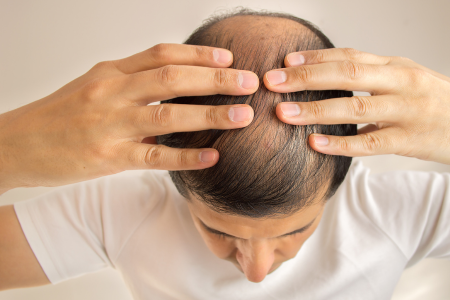
2. Scalp Massage: Two Minutes That Matter
Scalp massage is one of the most underrated hair health habits and one of the most accessible. Research has explored its potential to increase blood flow to the follicles and support the scalp environment. One small study found that regular scalp massage was associated with increased hair thickness over time.
Here is how to do it correctly:
Step 1. Use the pads of your fingertips, not your nails, across the full scalp including the sides and back.
Step 2. Apply slow, firm circular motions and move section by section rather than randomly. Spend about 30 seconds per zone.
Step 3. Aim for 2–3 minutes total. This can be done dry in the morning, in the shower while conditioning, or before bed.
Step 4. Do it daily. Consistency matters far more than technique or duration.
The two most common mistakes are pressing too hard and stopping after a few days. Light to medium pressure, done every day, is what builds results over time.
3. Eat for Your Follicles
Hair follicles are among the most nutritionally demanding cells in the body. They require a steady supply of protein, vitamins, and minerals to produce healthy strands through each growth cycle.
Key nutrients for hair health:
Protein, hair is made almost entirely of keratin, a structural protein. Without adequate dietary protein, the body may deprioritize hair growth. Good sources include eggs, fish, chicken, legumes, and Greek yogurt.
Iron, one of the most common nutritional contributors to increased shedding, particularly in women. Leafy greens, red meat, lentils, and pumpkin seeds are good sources. Pairing them with vitamin C improves absorption.
Zinc supports follicle repair and the oil glands around the follicle. Found in pumpkin seeds, oysters, beef, and chickpeas.
Biotin (B7) is widely associated with hair and nail health. Found in eggs, almonds, sweet potatoes, and spinach.
Omega-3 fatty acids support scalp health and may help reduce follicle inflammation. Found in fatty fish, flaxseeds, chia seeds, and walnuts.
Vitamin D levels have been associated with hair loss in several studies when low. Fatty fish, egg yolks, and sensible sunlight exposure are key sources.
Focusing on protein at every meal and adding a handful of seeds, pumpkin, sunflower, or chia, to salads, smoothies, or yogurt is one of the simplest ways to close common nutritional gaps without overhauling your entire diet.
Find Out What Researchers Have Discovered→

4. Be Gentle With Your Hair
Mechanical damage is one of the most overlooked contributors to hair thinning and breakage. Daily habits around washing, drying, and styling can either protect or quietly weaken hair over time.
Small adjustments that add up:
- Use a wide-tooth comb on wet hair rather than a brush, as wet hair is significantly more fragile
- Pat hair dry with a microfiber towel rather than rubbing vigorously
- Reduce heat styling frequency and always use a heat protectant when you do
- Avoid tight hairstyles that place tension on the hairline and scalp
- Switch to a silk or satin pillowcase to reduce overnight friction
- Wash with lukewarm rather than hot water to preserve the scalp’s natural oil balance
Air-drying whenever possible and reserving heat styling for specific occasions can visibly improve hair texture and reduce breakage over time without any other changes.
5. Manage Stress, Your Hair Will Notice
The link between stress and hair is well established. During periods of significant physical or emotional stress, the body can push a large number of follicles into the resting phase simultaneously. The result, known as telogen effluvium, can cause noticeable shedding weeks or even months after the stressful event.
Chronic low-level stress also affects hormone levels, sleep quality, and inflammation, all of which influence the scalp environment over time.
Simple habits that help bring stress levels down consistently: 10–15 minutes of daily breathwork, regular outdoor walks that combine movement with natural light exposure, and reducing screen time in the hour before bed. Even five minutes of slow deliberate breathing, four counts in, hold for four, exhale for six, can meaningfully lower cortisol in the short term.

6. Protect Your Sleep
Much of the body’s repair and regeneration happens during sleep, including processes that support follicle health and hormone regulation.
Poor or disrupted sleep has been linked to elevated cortisol, reduced growth hormone production, and increased systemic inflammation, all factors that can negatively affect hair growth cycles.
Maintaining a consistent sleep and wake time even on weekends, keeping the bedroom cool and dark, avoiding heavy meals within two hours of sleep, and limiting caffeine after early afternoon are habits that compound quietly over time. Even shifting your sleep schedule 30 minutes earlier consistently can improve sleep quality measurably over a few weeks.
🤦♀️ Everyday Habits That Quietly Work Against Your Hair
Just as supportive habits help hair thrive, certain common behaviors may quietly undermine it.
Crash dieting or severe calorie restriction, the body deprioritizes hair growth when energy is scarce. Rapid weight loss is a well-known trigger for increased shedding.
Excess sugar and processed foods can drive inflammation and affect hormone balance, both of which influence the scalp environment.
Overwashing strips the scalp’s natural oils too frequently, leading to dryness, irritation, and a less balanced scalp environment.
Ignoring the scalp is a common mistake. Many people focus entirely on the hair strand and neglect the scalp it grows from. A healthy scalp is the foundation of healthy hair.
Nutritional gaps are more common than people realize. Even a generally healthy diet can fall short in specific areas. Iron, zinc, vitamin D, and protein are the most common gaps that affect hair.
See What Researchers Have Found →
🌿 Traditional Herbs For Hair and Scalp Support
Herbal traditions across many cultures have long included plants associated with hair health. Modern research continues to explore their potential.
Saw Palmetto is studied for its potential role in supporting healthy hormone balance, particularly in relation to DHT, a hormone associated with follicle sensitivity.
Rosemary oil has been compared to minoxidil in at least one clinical study for scalp circulation support and is widely used for its potential to support follicle stimulation.
Pumpkin Seed Oil has been explored in emerging research for its potential role in supporting healthy hair growth, particularly in men.
Horsetail Extract is rich in silica, a mineral associated with hair strand strength and elasticity.
Nettle Root is traditionally used for scalp health and studied for its potential role in hormone balance related to hair.
These herbs have been used for centuries in traditional wellness systems. What’s interesting is that modern research is beginning to explore how they may connect to specific biological factors involved in hair loss, factors that go deeper than nutrition or stress alone.
💡What Health Experts Are Uncovering About Hair Loss

Lifestyle habits form the foundation of hair health. But researchers have been exploring something deeper, a biological factor that may be quietly working against hair follicles long before visible thinning begins. This factor has little to do with genetics or age alone.
Find Out What Researchers Have Discovered→
Final Thoughts:
Your hair responds to how you live, often long before any visible change appears. The most effective approach is not a dramatic intervention but a consistent, gentle routine built on habits the body recognises naturally. Start with one or two changes and build from there. And if you have been doing everything right and still not seeing results, it may be worth looking at what researchers have uncovered about what else could be at play.