

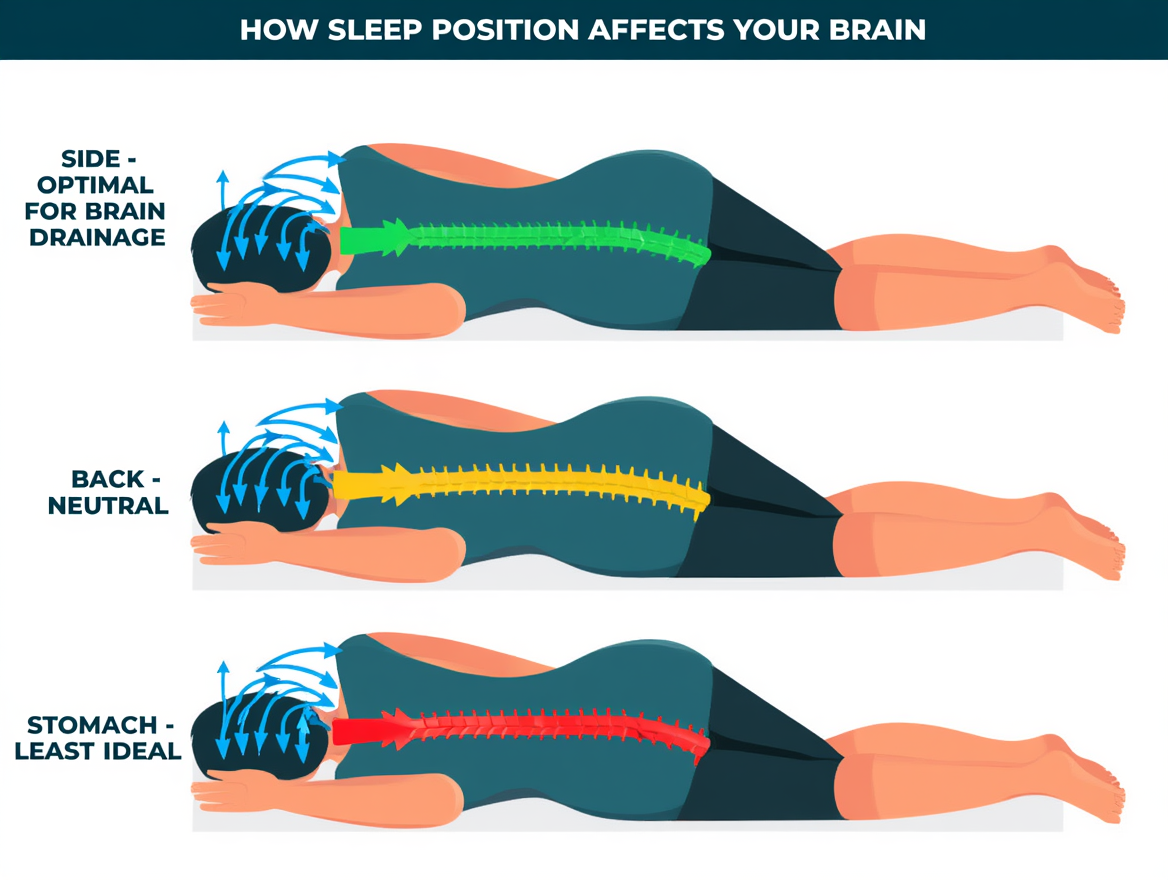
You probably think about sleep quality, but have you ever considered your sleeping position?
Emerging research suggests that how you position your body at night may influence circulation, spinal alignment, and even the brain’s overnight “cleanup system.” While sleep duration and depth remain the most important factors, posture could play a subtle supporting role in long-term cognitive health.
Let’s explore what science actually says, and what it doesn’t.
The Brain’s Overnight Reset System
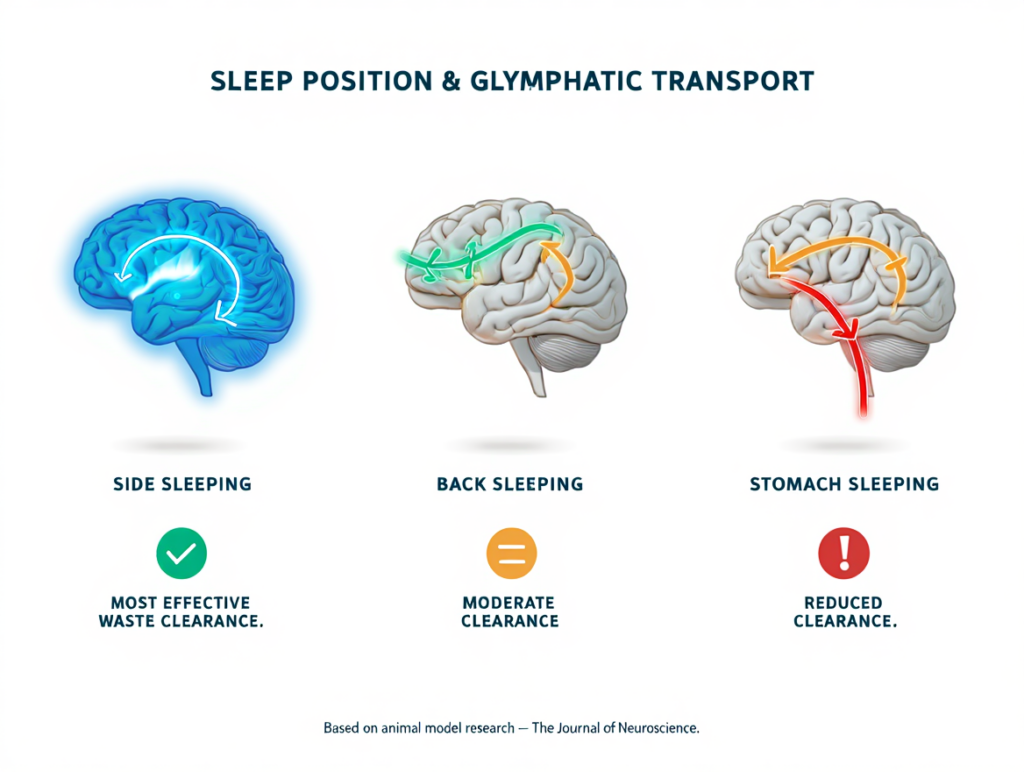
During sleep, your brain activates a network known as the glymphatic system. This system helps clear metabolic waste products that accumulate throughout the day.
Research published in The Journal of Neuroscience found that certain sleep positions in animal models influenced glymphatic transport efficiency, with lateral (side) sleeping showing more effective waste clearance compared to supine (back) or prone (stomach) positions [1].
While human research is still developing, scientists believe sleep posture may influence:
- Cerebrospinal fluid flow
- Brain waste clearance
- Circulatory efficiency
- Airway openness
It’s important to note: most definitive data comes from animal studies. However, the findings have sparked meaningful discussion about sleep positioning in humans.
Side Sleeping: A Potential Advantage?
Side sleeping (also called lateral sleeping) is often considered the most supportive position for several reasons:
- Helps keep airways open
- May reduce snoring
- Supports spinal alignment (when properly supported)
- Potentially enhances glymphatic clearance [1]
Additionally, side sleeping is often recommended during pregnancy and for individuals with mild sleep-disordered breathing because it can improve airway stability.
If brain health is your focus, side sleeping may offer subtle advantages, especially when paired with high-quality, uninterrupted sleep.
Back Sleeping: Neutral But Not Always Ideal
Sleeping on your back allows for neutral spine alignment when supported properly with pillows. However, for some individuals, this position may:
- Increase snoring
- Worsen airway obstruction in those prone to sleep apnea
- Reduce oxygen stability during sleep
Since oxygenation is critical for brain health, individuals with breathing disturbances may benefit from lateral positioning instead.
That said, back sleeping is not inherently harmful, especially if breathing remains stable.
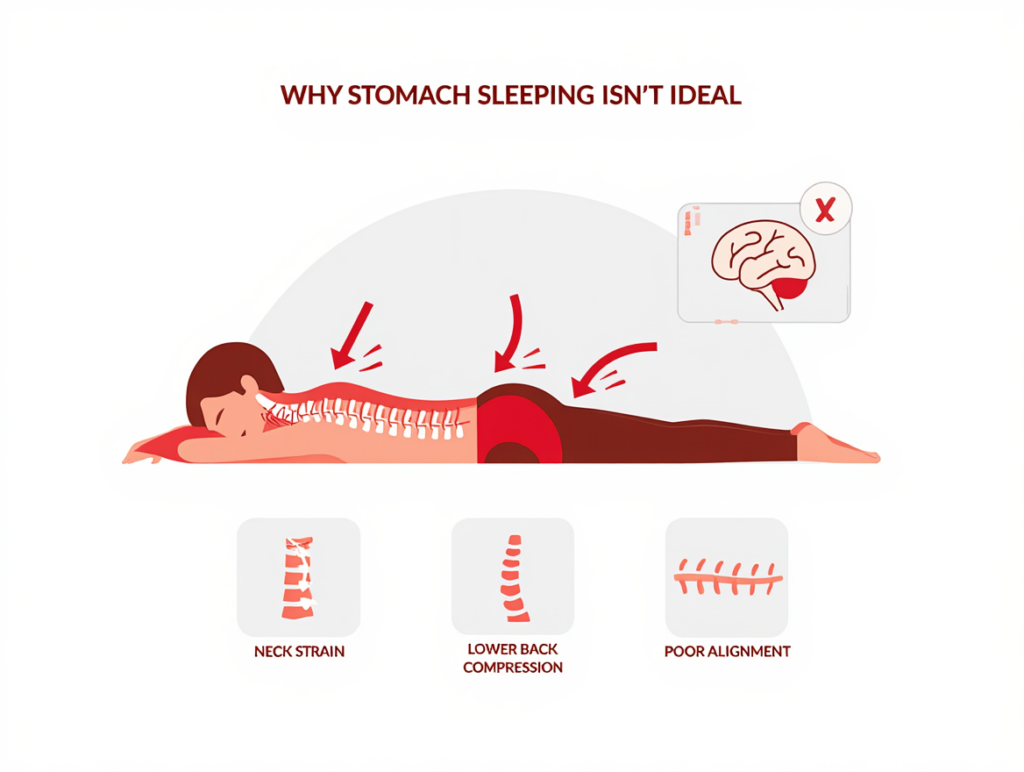
Stomach Sleeping: Least Supportive for Brain and Spine
Stomach sleeping is generally the least recommended position because it can:
- Strain the neck
- Compress the lower back
- Restrict natural spinal alignment
While there’s limited research directly linking stomach sleeping to cognitive outcomes, poor sleep quality caused by discomfort or airway restriction can indirectly affect memory consolidation and mental clarity [2].
Why Sleep Quality Still Matters Most
While posture may play a role, the most important factor for brain health is deep, restorative sleep.
During slow-wave sleep:
- Memory consolidation occurs
- Neural repair processes activate
- Glymphatic activity increases
- Stress hormones decline
Chronic sleep deprivation has been consistently associated with impaired cognitive performance, mood changes, and long-term neurological risk [2].
In other words, position may help, but duration and depth matter more.
How to Optimize Your Sleeping Position for Brain Support
If you’d like to experiment with sleep posture:
For Side Sleeping:
- Use a pillow that keeps your neck neutral
- Place a pillow between knees to align hips
- Avoid curling too tightly
For Back Sleeping:
- Use a pillow that supports natural cervical curvature
- Place a small pillow under knees to reduce spinal pressure
Avoid:
- Excessively high pillows
- Twisted neck positions
- Sleeping without adequate support
Comfort promotes deeper sleep, and deeper sleep supports brain health.
The Bottom Line
Does your sleeping position affect brain health?
The research suggests it might play a supportive role, particularly in how efficiently the brain clears waste during sleep. However, posture is only one piece of the larger picture.
If you want to support long-term cognitive resilience:
- Prioritize consistent sleep schedules
- Aim for 7–9 hours nightly
- Reduce late-night light exposure
- Manage stress levels
- Create a dark, cool sleeping environment
Position can refine your routine, but foundational sleep habits build lasting results.
Final Thoughts:

Brain health isn’t shaped by one dramatic intervention, it’s shaped by consistent nightly recovery. Small adjustments, like improving sleep posture, can support the larger goal of deeper, restorative rest. When you respect sleep as your brain’s reset window, you support clarity, resilience, and long-term vitality.
References:
- Lee, H.; Xie, L.; Yu, M.; et al. The effect of body posture on brain glymphatic transport. The Journal of Neuroscience 2015, 35(31), 11034–11044.
https://www.jneurosci.org/content/35/31/11034 - Rasch, B.; Born, J. About sleep’s role in memory. Physiological Reviews 2013, 93(2), 681–766. https://journals.physiology.org/doi/full/10.1152/physrev.00032.2012